🐾 Protecting Your Dog’s Paws from Hot Pavement
☀️ Summer Dog Safety Series
〰️
☀️ Summer Dog Safety Series 〰️
Summer means longer days, more time outside, and plenty of opportunities for adventures with your pup. But as temperatures climb, sidewalks, pavement, sand, and other surfaces can become dangerously hot — sometimes much hotter than the air around us.
While we have shoes protecting our feet, our dogs are walking directly on those surfaces. Paw pads are tough, but they aren't burn-proof. Knowing how to recognize dangerous surfaces and protect your dog's paws can help keep summer walks safe and comfortable.
1. Pavement Can Be Much Hotter Than the Air
One of the biggest misconceptions about summer walks is that a comfortable air temperature means the ground is comfortable too.
Pavement absorbs and holds heat from the sun, allowing its surface temperature to climb well above the surrounding air temperature. Asphalt is especially good at absorbing heat, but concrete, artificial turf, decking, and other surfaces can also become surprisingly hot.
And don't forget about the beach! Sand exposed to direct sunlight can become hot enough to burn sensitive paw pads too.
Before heading out, consider not only the temperature outside but also where your dog will actually be walking.
2. Check the Ground Before You Walk
A quick ground check can help you decide whether a surface is too hot for your pup.
Place the back of your hand against the pavement for several seconds. If it's uncomfortable or too hot for you to keep your hand there, it's too hot for your dog's paws.
Remember that conditions can also change throughout your walk. A shaded sidewalk near home may feel comfortable while exposed pavement farther down the road has been baking in direct sunlight.
When in doubt, choose a cooler route.
3. Know the Signs of Burned Paw Pads
Dogs don't always immediately show us that their paws hurt. Watch for changes in the way your dog walks or behaves during and after a summer outing.
Signs of irritated or burned paw pads may include:
Limping or refusing to walk
Frequently lifting one or more paws off the ground
Licking or chewing at the feet
Redness or tenderness
Blisters
Paw pads that appear darker than usual
Cracking or peeling
Missing or damaged portions of the paw pad
If your dog suddenly begins limping or refusing to continue during a walk, don't force them to keep going. Move them to a cooler surface and check their paws.
4. Choose Cooler Times and Surfaces
One of the easiest ways to protect your dog's paws is simply changing when and where you walk.
Early mornings and evenings are generally better choices during hot weather, while the middle and later parts of the day can leave exposed surfaces extremely hot.
Whenever possible, choose:
Shaded trails
Grass
Dirt paths
Forest trails
Shaded sidewalks
Keep in mind that surfaces can remain hot even after the air begins to cool, especially pavement that has spent hours absorbing heat from the sun.
Sometimes the safest summer walk is simply a shorter one.
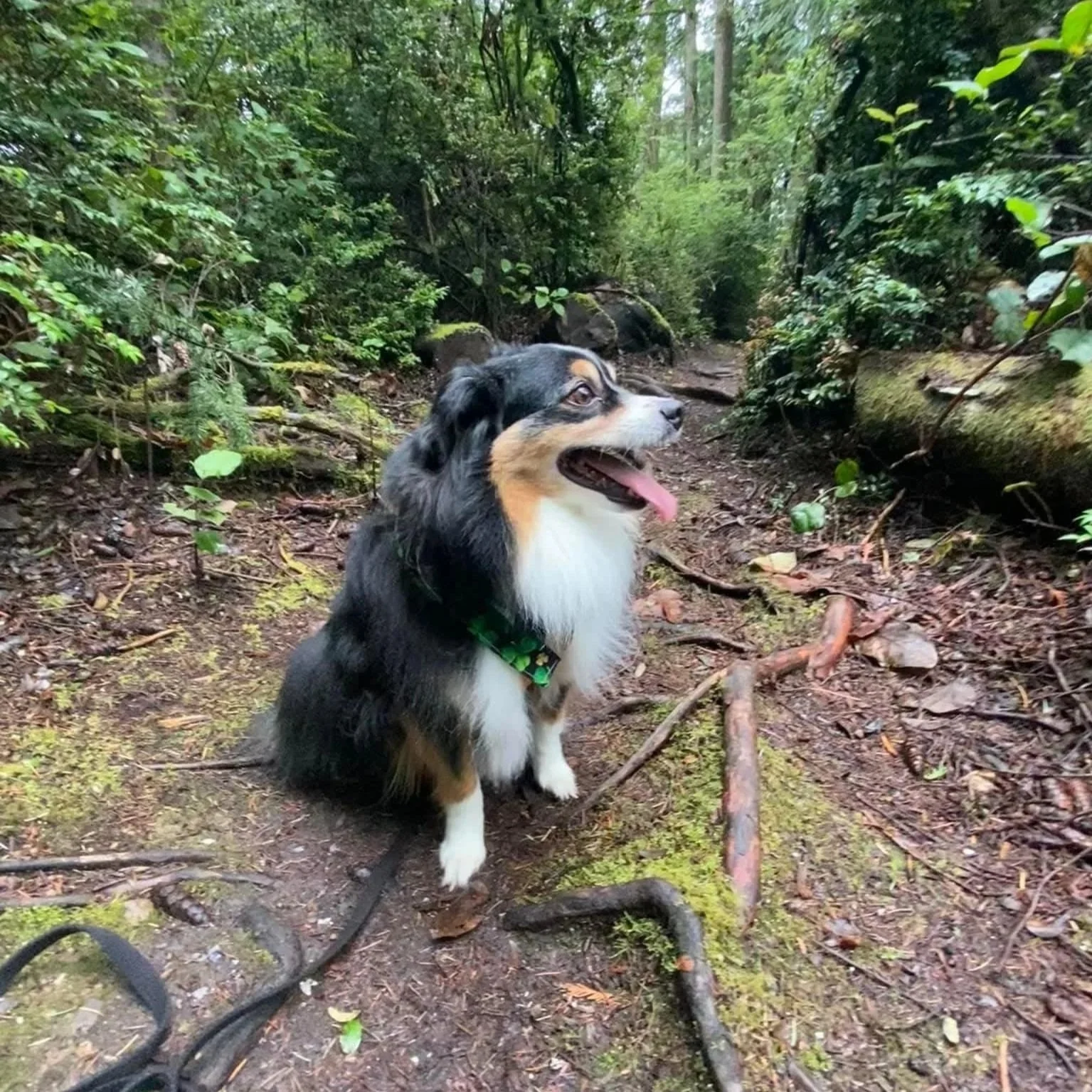
Adventuring Forest Trails
Ambassador Dash getting out and exploring a forest trail where the ground is cooler and shade is available.
5. Protect Their Paws with the Right Gear
Sometimes avoiding hot or rough surfaces isn't possible. Having the right paw protection can make summer walks and adventures much more comfortable for your pup.
Dog Boots
Dog boots provide one of the best physical barriers between your dog's paws and hot pavement, sharp rocks, gravel, and rough terrain.
There are several styles to choose from depending on your adventure:
Rubber-soled boots: Great for pavement, hiking, and rough terrain because the thicker sole provides more protection from heat and sharp surfaces.
Lightweight dog shoes: A good option for everyday walks when you want protection without the bulk of a traditional hiking boot.
Rubber or silicone booties: Helpful for short outings and added traction, but thinner materials may not provide enough insulation for extremely hot pavement.
Disposable or reusable dog booties: Lightweight and easy to stash in a hiking or adventure bag as backup paw protection.
Fit is important. Boots should stay securely in place without rubbing or restricting movement. If your dog has never worn them before, introduce them gradually at home with short sessions, praise, and plenty of treats.
And don't worry if those first few steps look hilariously dramatic — the high-stepping "what did you put on my feet?!" walk is practically a rite of passage.
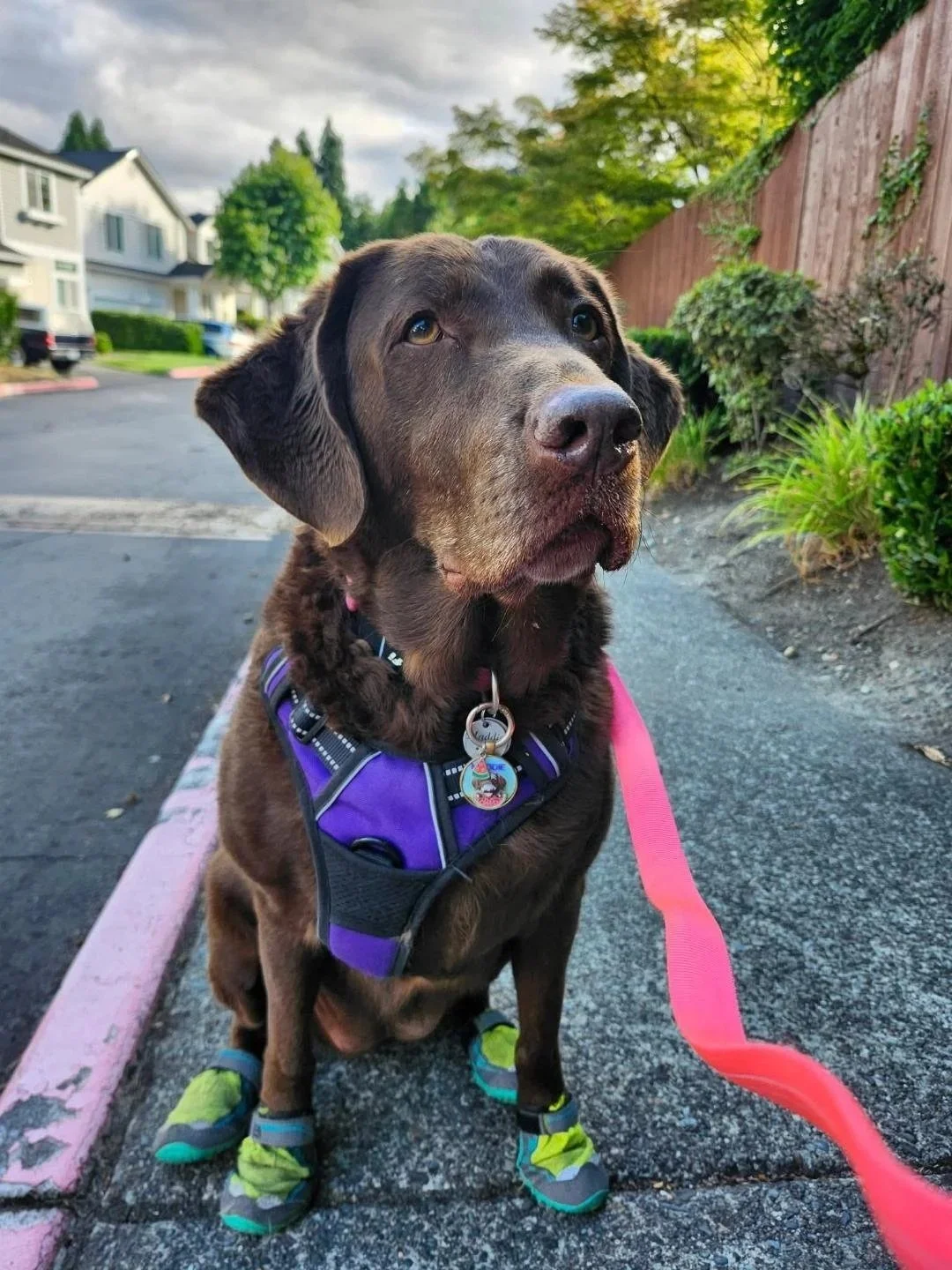
Well-Fitted protective boots
Ambassador Maddie understands the importance of protective footwear after experiencing an injury causing a raw paw pad. She is sure to wear them if the outside temp is 77 degrees or hotter.
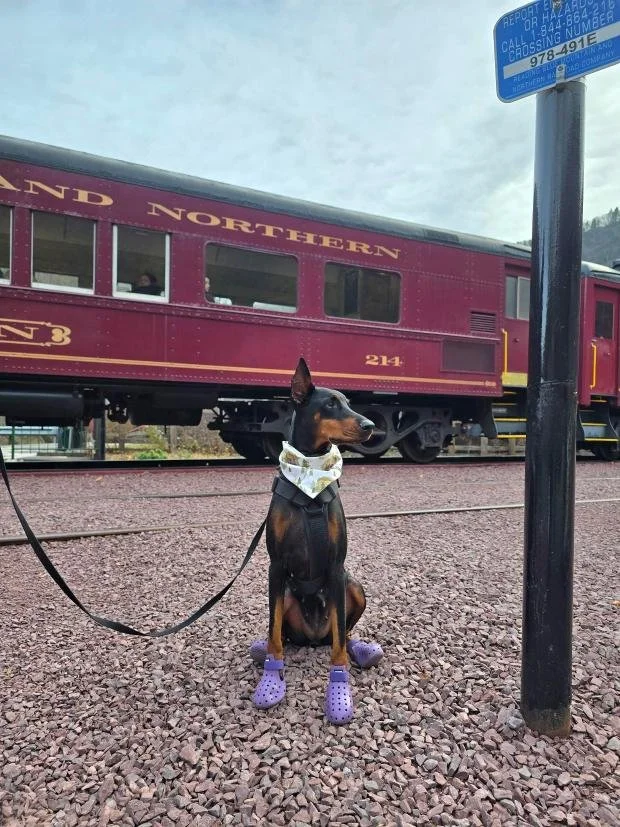
Natural rubber ventilated boots
Ambassador Lita wearing her WagWellies® Mojave Boots for reliable protection against the rough, rocky ground.
Paw Wax & Protectants
Paw wax can create a thin protective barrier on the paw pads and may be useful for everyday adventures, particularly on rough, dry, or abrasive surfaces.
Apply it before heading outside according to the product's directions and remember that paw wax should not be relied on to make dangerously hot pavement safe. If the ground is too hot for bare paws, choose a cooler surface or use appropriate protective footwear.
Paw Balms & Salves
After adventures, paw balms and salves can help moisturize and condition dry, rough, or cracked paw pads.
Look for products specifically formulated for dogs and made with pet-safe ingredients, since your pup will probably lick their paws at some point.
A little paw care after a long day of exploring can go a long way toward keeping those adventure feet ready for whatever comes next.
Adventure Tip: Keep a pair of dog booties and a small container of paw balm or wax in your hiking bag or vehicle. Even if your dog doesn't normally wear boots, having emergency paw protection available can be incredibly helpful if a pad becomes irritated or injured while you're away from home.
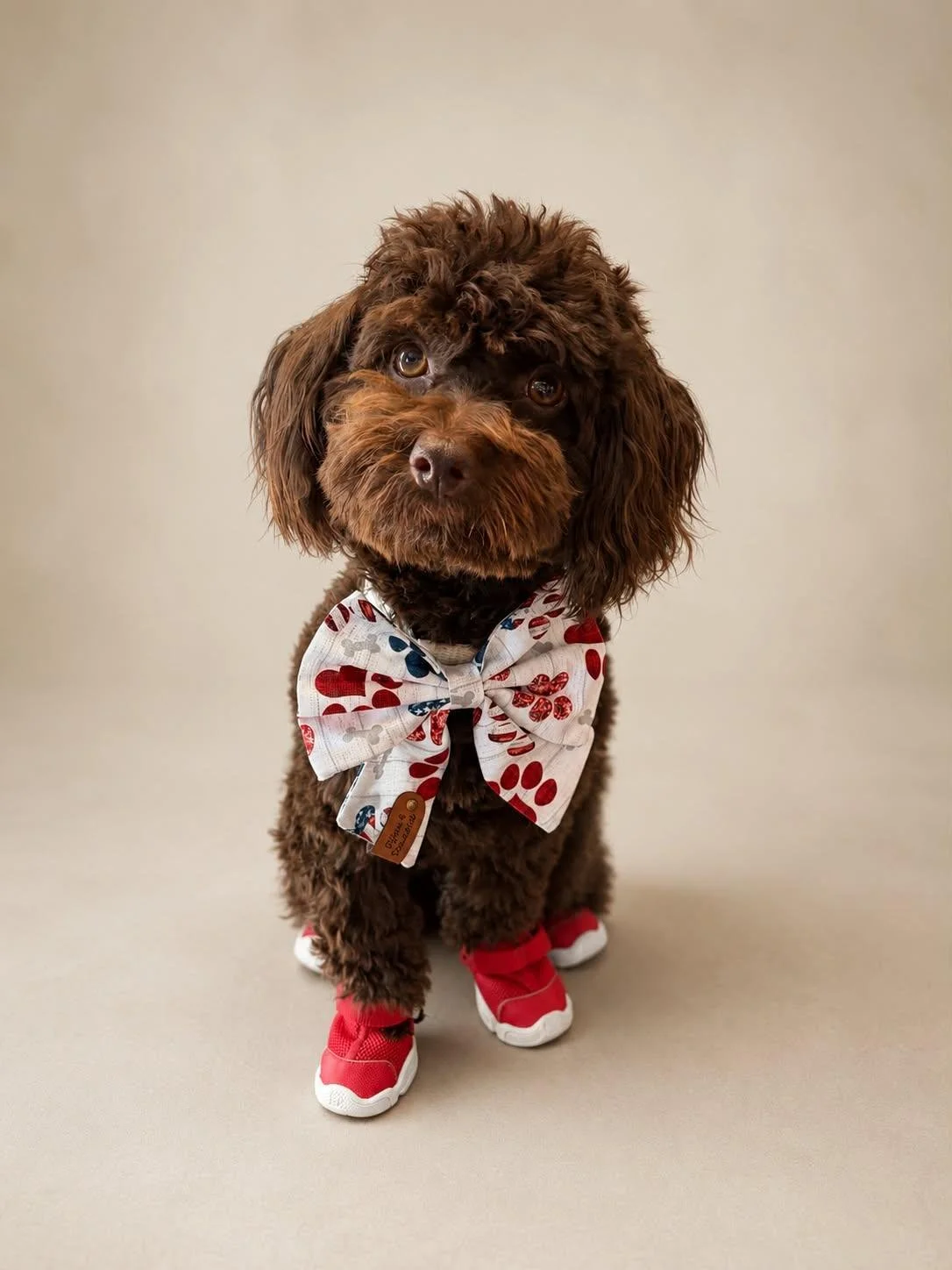
Rubber soled boots
Ambassador Sancho wearing his rubber soled boots and ready to go on an adventure.
6. How to Measure Your Dog’s Paws for Boots
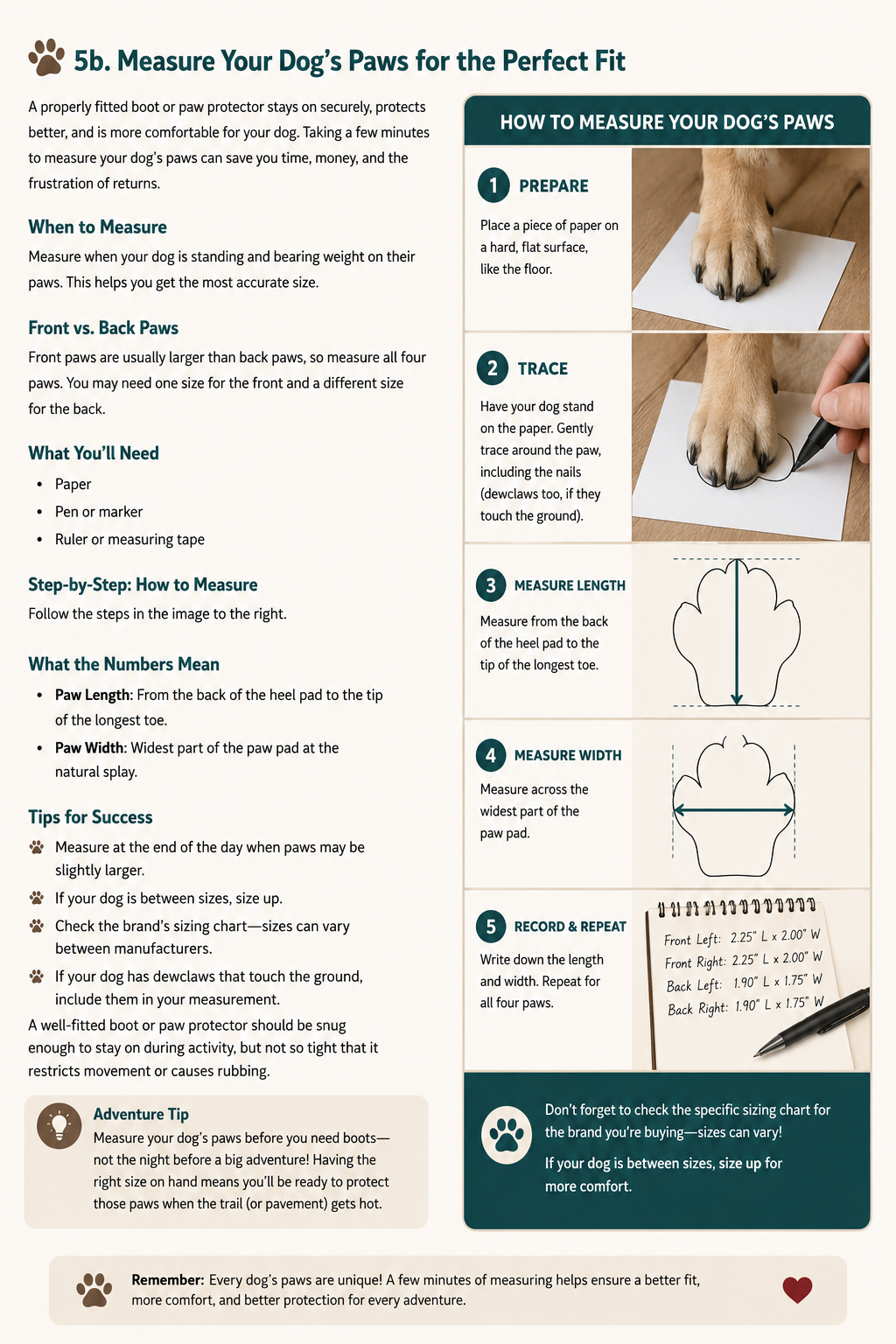
Finding the right fit is just as important as choosing the right type of footwear. Boots that are too loose can twist or fall off, while boots that are too tight can rub, restrict movement, and make your dog uncomfortable.
And don't assume all four paws are the same size! A dog's front paws are often slightly larger than their back paws, so it's a good idea to measure each paw individually.
How to Measure Your Dog’s Paws
For the most accurate measurement, have your dog stand naturally and put weight on the paw. This allows the paw and toes to spread the way they normally would while walking.
Place a piece of paper on a hard, flat surface.
Have your dog stand with one paw on the paper.
Gently trace around the paw while your dog is putting weight on it.
Measure the widest part of the paw from side to side.
Measure the length from the back of the heel pad to the tip of the longest toe or nail, depending on the manufacturer's measuring instructions.
Repeat the process for all four paws and write down the measurements.
Always compare your measurements with the specific manufacturer's sizing chart before ordering. Dog boot sizing isn't universal, so your pup may wear one size from one brand and something completely different from another.
If your dog's measurement falls between sizes, follow the manufacturer's recommendation — many suggest sizing up, but this can vary depending on the style of boot.
Once the boots arrive, check the fit while your dog is standing and walking. They should be snug enough to stay securely in place without pinching, rubbing, or restricting the natural movement of the paw.
Adventure Tip: Measure your dog's paws before you actually need boots. Having properly fitted paw protection already tucked into your adventure gear is much better than trying to figure out sizing the night before a hike — or after you've discovered the pavement is too hot.
7. Watch for Trail & City Paw Hazards
Hot pavement isn't the only thing that can hurt your dog's paws. Whether you're miles down a forest trail or simply walking around the block, it's important to pay attention to what's on the ground ahead of you.
On the Trail
Rocky trails, gravel, sharp stones, thorns, broken branches, and other rough terrain can cause cuts, abrasions, punctures, or torn paw pads.
Check your dog's paws periodically during longer adventures rather than waiting until you get home. Pay particular attention after crossing rocky areas, scrambling over rough terrain, or walking through areas with dense vegetation.
A cut paw several miles into a hike can quickly turn into a much bigger problem — and if your dog can't comfortably walk, you need to be prepared to carry them out.
Paw protection in Parks
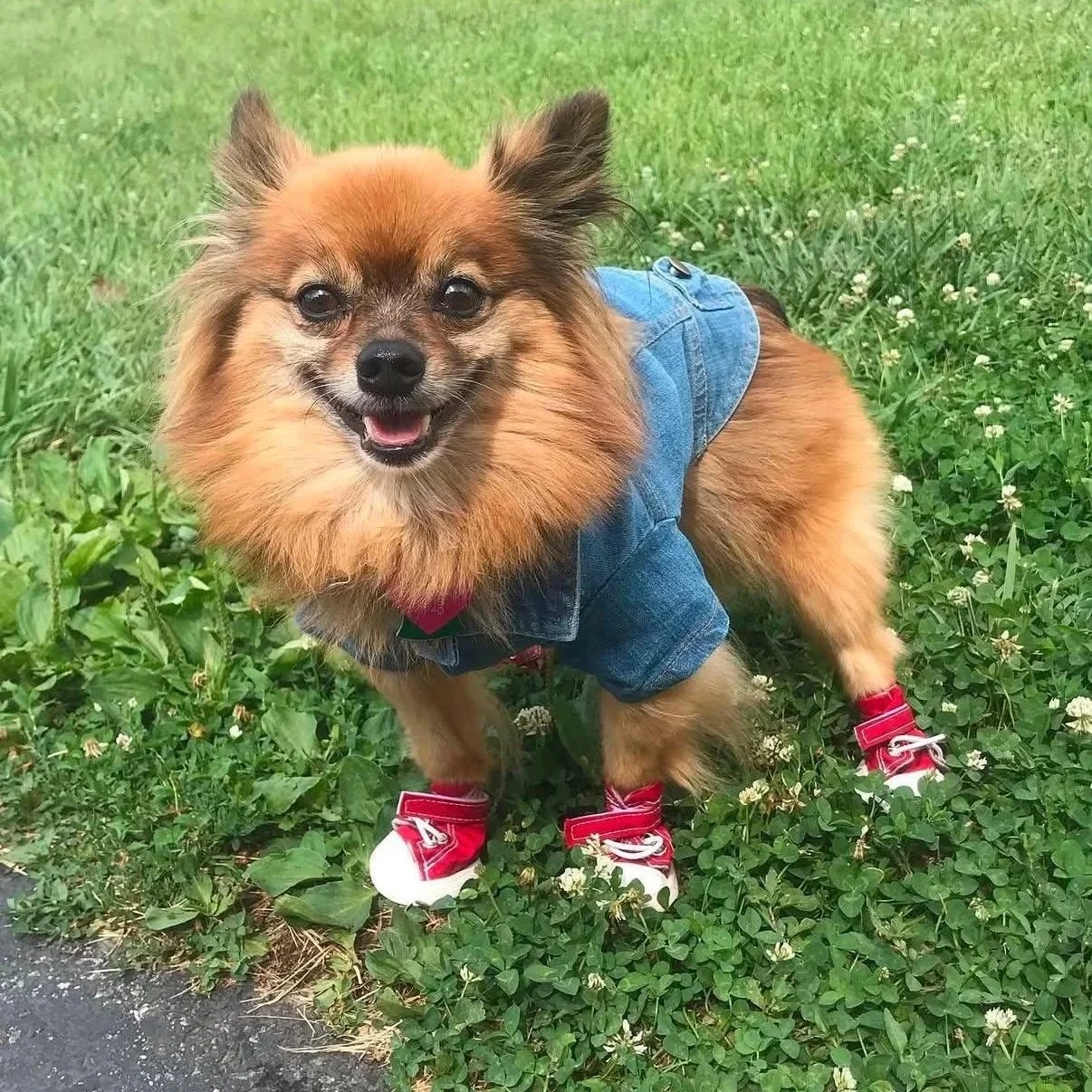
Ambassador Riley carefully protecting her paws while exploring the park.
In the City
Urban and neighborhood walks come with their own set of paw hazards.
Keep an eye out for:
Broken glass
Sharp pieces of metal
Construction debris
Discarded food, bones, and other trash
Chemicals or automotive fluids on streets and parking lots
Sharp landscaping materials
And, as much as we hate to say it, discarded drug paraphernalia, including needles
Scan the sidewalk and surrounding area as you walk, particularly around parking lots, alleys, parks, public transit areas, and other places where debris may collect.
If you spot a needle or other potentially hazardous item, steer your dog well away from it rather than attempting to move it with your hands.
🐾 Special Note for Hikers: Have a Plan to Carry Your Dog
If your dog injures a paw several miles from the trailhead, walking out may not be an option — and carrying even a medium-sized dog in your arms for miles can be extremely difficult.
Fortunately, there are lightweight dog rescue harnesses and emergency carrying slings designed specifically for situations like this. Many fold or pack down small enough to keep in a hiking or backpacking kit and allow you to carry an injured or exhausted dog out of the backcountry.
If you regularly hike with your dog, consider adding one to your adventure gear — especially for longer hikes or trips into remote areas.
Just like any other piece of emergency equipment, don't wait until you need it to figure out how it works. Practice using the carrier at home, make sure it's appropriately sized for your dog's weight and body shape, and learn how to secure and carry them properly.
Adventure Tip: Your first-aid plan shouldn't end with treating an injury. Before heading into the backcountry, ask yourself: If my dog couldn't walk right now, could I safely get them back to the trailhead? If the answer is no, an emergency dog carrier may be one of the most valuable pieces of gear in your pack.t.
8. Give Those Paws a Post-Adventure Check
After walks, hikes, beach trips, and other outdoor adventures, take a minute to look over your dog's paws.
Check between the toes and around the pads for:
Small cuts or abrasions
Cracks
Redness
Foxtails, burrs, or other debris
Tiny rocks or gravel
Irritation between the toes
A quick wipe-down can also remove dirt, sand, pollen, and other debris. We love keeping pet-safe wipes handy for quick paw and fur cleanups while we're out adventuring.
Catching a small irritation early can help prevent it from becoming a much bigger problem.
9. What to Do If Your Dog Burns Their Paws
If you suspect your dog has burned their paw pads, immediately move them away from the hot surface.
Gently cool the paws with cool — not ice-cold — water. Avoid applying ice directly to the paw pads, and try to prevent your dog from licking or chewing the injured area.
Burned paw pads can be extremely painful and may require veterinary treatment, particularly if you notice blistering, peeling skin, open wounds, significant discoloration, or difficulty walking.
Contact your veterinarian for guidance if you suspect a burn or significant paw injury.
🐾 The Bottom Line
Summer adventures don't have to stop when temperatures rise — they may just require a little extra planning.
Check the ground before heading out, choose cooler times and surfaces whenever possible, keep an eye on your dog's body language, and make paw checks part of your normal adventure routine.
Those paws carry our dogs through neighborhood walks, forest trails, camping trips, beach days, and countless adventures with us.
They're worth protecting. ❤️
🐾 Summer Dog Safety Series
This article is part of our Summer Dog Safety Series, where we're sharing practical tips to help you and your pup safely enjoy everything summer has to offer.
Because the best summer adventures are the ones where everyone comes home happy, healthy, and ready for the next one.