🧊 Easy Ways to Keep Your Dog Cool
☀️ Summer Dog Safety Series
〰️
☀️ Summer Dog Safety Series 〰️
Summer means longer days, outdoor adventures, camping trips, beach days, and more opportunities to get outside with our dogs. But as temperatures climb, keeping our pups comfortable and cool becomes an important part of enjoying those summer adventures safely.
Throughout our Summer Dog Safety Series, we've talked about recognizing overheating, knowing when it's too hot to walk your dog, protecting paws from hot surfaces, and preparing for outdoor adventures. For our final week, we're wrapping things up with something simple: easy ways to help keep your dog cool.
From choosing cooler places to explore to packing a few extra summer essentials, small changes can make a big difference.
1. Plan Outdoor Time Around the Heat 🌲💦
One of the easiest ways to keep your dog cool is simply changing when and where you spend time outside.
Early mornings and evenings are generally much more comfortable than the middle of the day. During especially hot weather, save longer walks, hikes, and active play for the coolest parts of the day.
Where you go matters, too.
Look for shaded trails or plan adventures around creeks, rivers, and lakes, where temperatures may feel cooler and your dog may have opportunities to wet their paws or take a supervised splash.
Even if your dog isn't much of a swimmer, being near water and having access to shaded areas can make an outing much more comfortable.
Watch for Harmful Algae Blooms
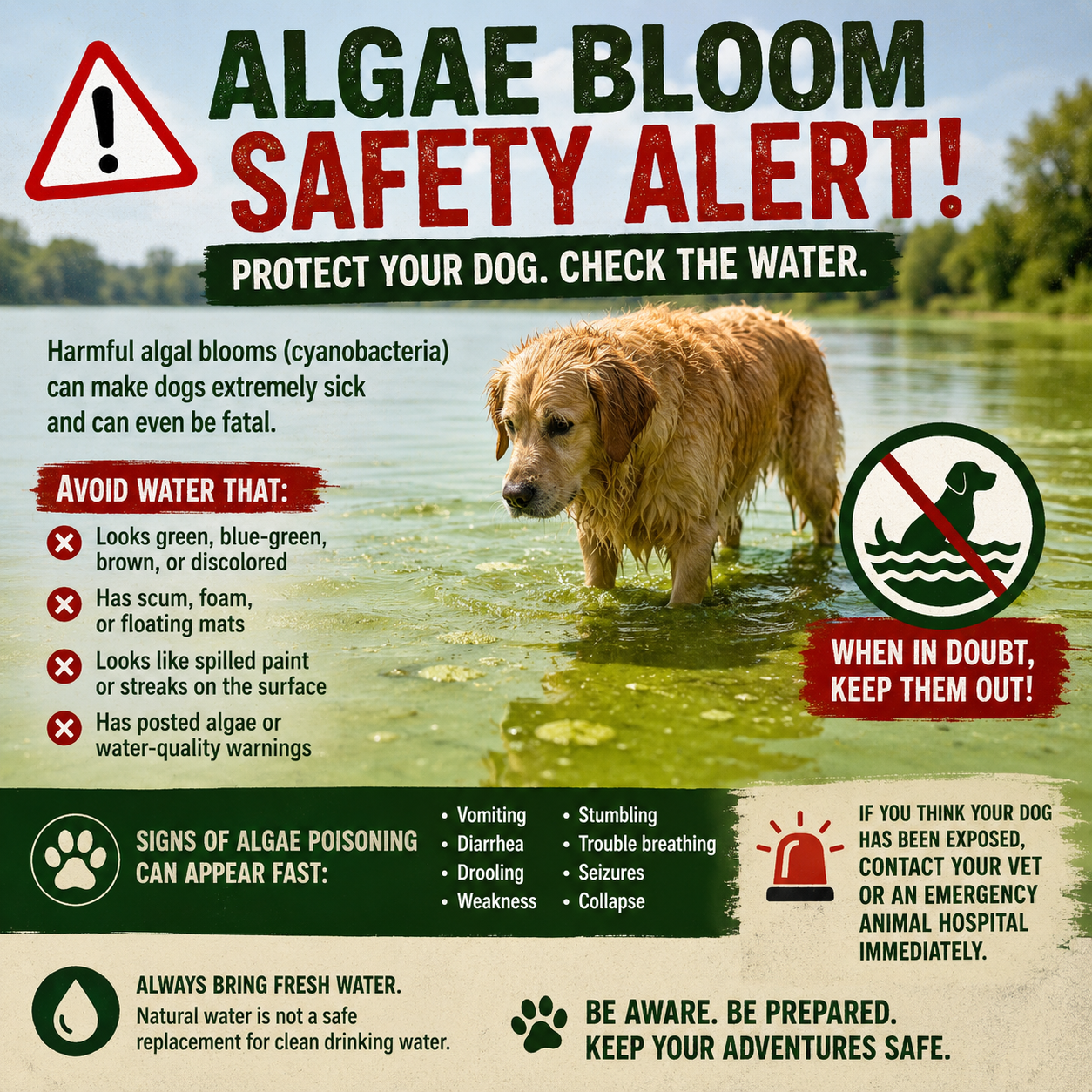
Algae Bloom Safety Alert
Before letting your dog jump into a lake, pond, or slow-moving body of water, check the water first.
Warm summer temperatures can create ideal conditions for harmful algal blooms, including cyanobacteria—often called blue-green algae. Some blooms produce toxins that can make dogs extremely sick and can even be fatal.
Avoid water that:
Has green, blue-green, brown, or unusual discoloration
Has foam, scum, or floating mats on the surface
Looks like spilled paint
Has posted algae or water-quality warnings
Because harmful algae isn't always obvious just by looking at the water, check local advisories when possible before visiting your favorite swimming spot.
And remember: natural water isn't a replacement for clean drinking water. Bring enough fresh water for your dog rather than relying on lakes, creeks, ponds, or puddles along the way.
2. Keep Fresh Water Available Everywhere 💧
Whether you're going around the block, heading to the beach, camping for the weekend, or spending the day on the trail, always make sure your dog has access to plenty of fresh drinking water.
Collapsible bowls and portable dog water bottles make it easy to offer frequent water breaks without adding much weight to your gear.
For longer adventures, pack more water than you think you'll need. Don't assume you'll be able to refill along the way.
Don't Forget About Stored Water
Water that's been sitting in a hot car can become surprisingly warm.
If you keep emergency water bottles in your vehicle or regularly carry reusable water bottles, refresh that water frequently during the summer.
Reusable bottles and bowls should also be emptied and cleaned regularly rather than continually topped off. Warm temperatures can encourage bacterial growth, especially in containers that have been repeatedly used by your dog.
Fresh water should actually be fresh.
3. Give Them a Cool Place to Relax 🧊
Keeping your dog cool doesn't always require anything complicated.
Sometimes they simply need a comfortable place to escape the heat.
Air conditioning, fans, shaded grass, elevated mesh beds, and cooling mats can all help create a cooler place for your dog to relax.
Check Those Older Cooling Mats
If you've had the same gel cooling mat for several summers, give it a quick inspection before putting it back into regular use.
Over time, some cooling mats can begin to stiffen or harden, making them less comfortable and potentially less useful.
There are also newer cooling pads and cooling blankets available that feel more like traditional bedding. These options can sometimes be more expensive upfront, but many are designed for repeated use and may last considerably longer than inexpensive gel-style mats.
Whatever cooling product you use, periodically inspect it for:
Tears or punctures
Leaking gel
Damaged seams
Hardened material
Signs of chewing or deterioration
If your dog is a chewer, make sure any cooling mat or pad you choose is appropriate for supervised use.
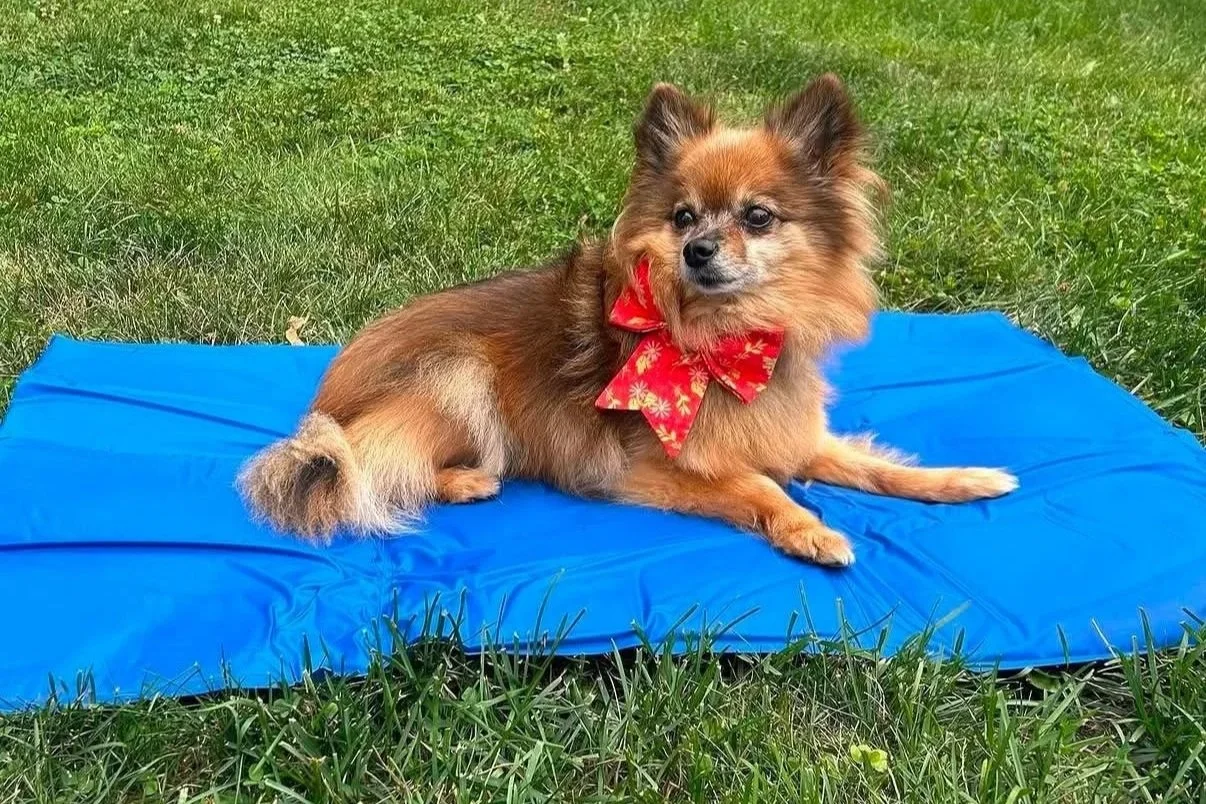
Ambassador Riley enjoying her cooling mat.
4. Turn Cooling Down Into Play 💦🎾
Cooling off can be fun!
For dogs who enjoy water, summer is a great time to incorporate it into their favorite games.
Try:
A kiddie pool
Sprinklers
A dog splash pad
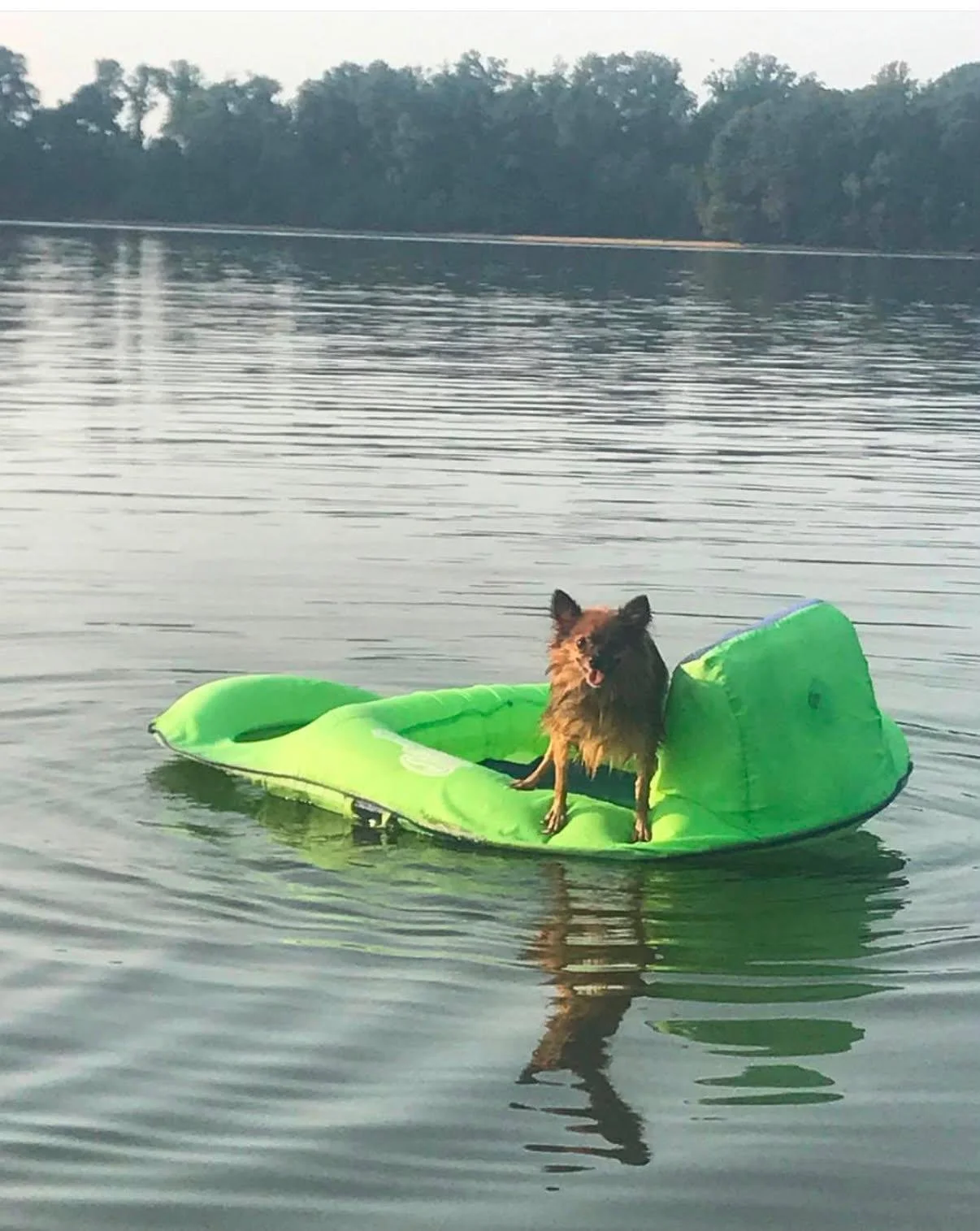
Supervised swimming
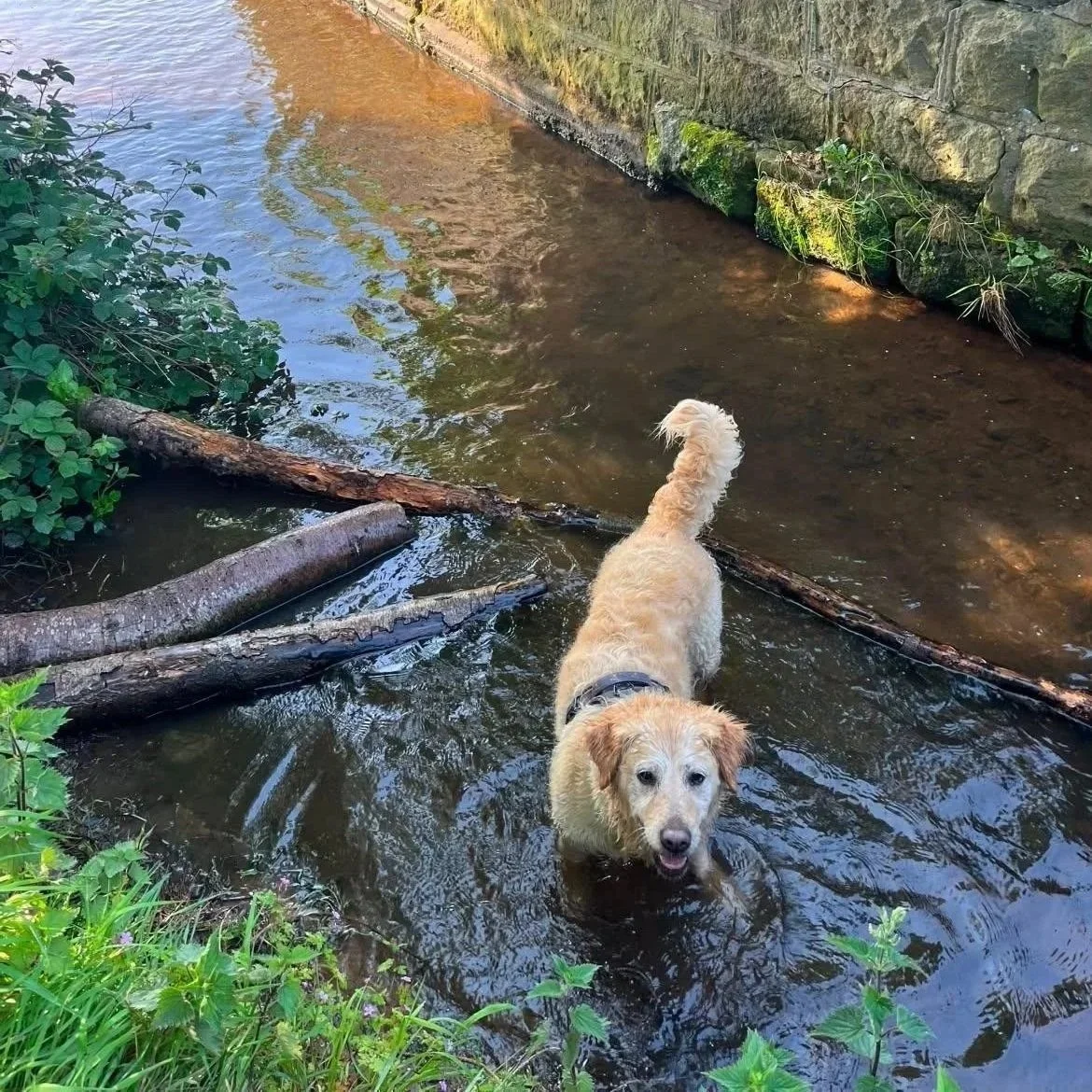
Shallow creek play
Water fetch
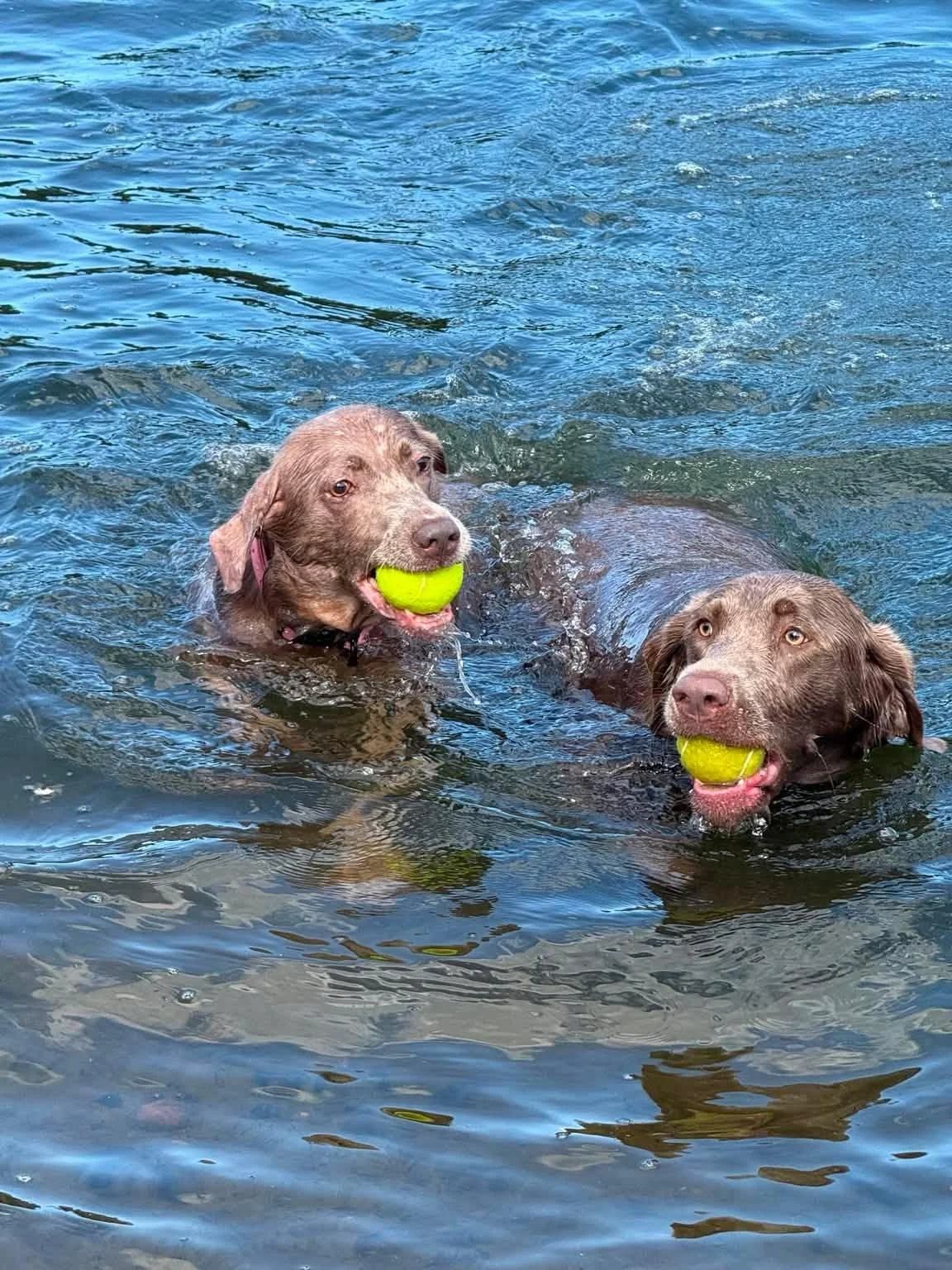
Adding floating water toys can make swimming and water play even more exciting. Toys such as Chuckit! Amphibious balls and floating fetch sticks are designed to float and can be easier for dogs to spot and retrieve in the water.
Just remember that swimming is exercise.
Dogs can become tired even while they're staying cool in the water, so provide plenty of breaks and always have fresh drinking water available.
And don't force it.
Not every dog wants to swim. Some dogs are perfectly happy standing ankle-deep in a creek, splashing in a shallow pool, or watching everyone else get wet from the safety of dry land.
Cooling activities should always match your dog's comfort level.
5. Make Cooling Gear Work Harder 🥾🧊
Cooling bandanas, vests, and similar gear can be helpful additions to your summer adventure kit, especially when hiking, camping, or spending longer periods outdoors.
Most evaporative cooling gear works best when it's regularly re-wetted.
Try This Hiking Trick
If you're planning a hike, freeze one of your water bottles the night before.
As the bottle slowly melts throughout the day, you'll have cool water available to refresh your dog's cooling bandana or vest.
Just make sure you're still carrying plenty of separate drinking water for both you and your dog.
And remember:
Cooling gear doesn't make dangerous temperatures safe.
Think of cooling products as an extra layer of comfort—not permission to continue hiking, walking, or playing when conditions are too hot.
6. Be Careful With Ice & Frozen Treats 🧊🐶
Frozen treats are often recommended as an easy way to help dogs cool down during the summer, but colder isn't necessarily better for every dog.
Some dogs simply don't tolerate very cold foods or water well.
Bijoux is one of them.
If your dog vomits, gags, seems uncomfortable, or develops an upset stomach after eating ice or very cold treats, skip them and choose another cooling option.
Hard ice cubes can create other concerns as well.
Dogs who aggressively crunch ice may risk damaging or fracturing their teeth, particularly senior dogs or dogs with existing dental problems. Large pieces can also become a choking hazard when swallowed too quickly.
Instead of whole, rock-hard ice cubes, consider:
Chilled treats
Refrigerated water
Partially thawed frozen treats
A briefly chilled lick mat
Soft frozen enrichment that isn't rock-hard
The goal is to help your dog feel comfortable—not give them an upset stomach.
Know your dog and what works best for them.
7. Create Your Own Shade ⛱️🐾
Sometimes shade isn't guaranteed.
If you're heading to the beach, campground, sporting event, picnic, or another open area, consider bringing a pop-up shade tent or portable canopy for your dog.
This can be especially helpful at beaches, where natural shade may be limited or nonexistent.
Set up a comfortable resting area underneath with fresh water, a cooling mat or blanket, and good airflow.
And remember that shade moves.
A campsite that's completely shaded in the morning may be sitting in direct sunlight a few hours later. Check your dog's resting area throughout the day and move your shade setup when necessary.
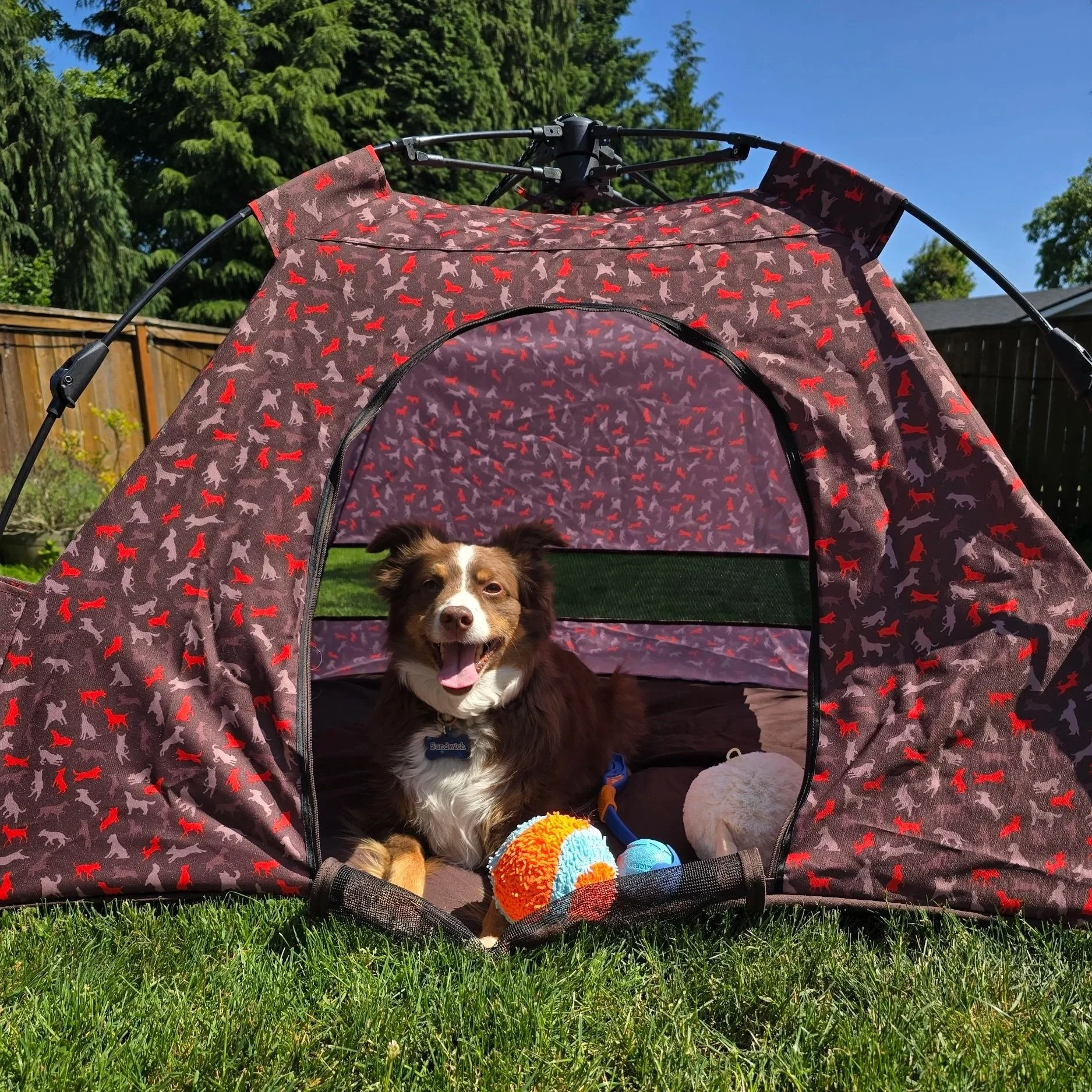
A simple pop-up tent creates shade
Sandwich enjoying the extra shade on a sunny day to help beat the heat.
8. Don't Rely on Your Car or RV to Stay Cool 🚗🚐
A vehicle can become dangerously hot much faster than many people realize.
Even on a relatively mild day, temperatures inside a parked vehicle can climb rapidly. Research has found that vehicle interiors can rise roughly 20°F within the first 10 minutes and around 40°F within an hour, with much of that temperature increase happening early.
That means temperatures can approximately reach:
Outside temperature inside a vehicle after about an hour* 70°F around 110°F, 75°F around 115°F, 80°F around 120°F, 85°F around 125°F, 90° around 130°F
These are general estimates. Actual temperatures vary depending on sunlight, cloud cover, vehicle type, exterior and interior colors, location, and other conditions.
Cracking the windows isn't enough to keep a parked vehicle safely cool.
What About an RV?
An RV gives us more cooling options than a parked vehicle—but only when those systems are working.
Without air conditioning, an RV sitting in direct summer sunlight can heat up quickly. Large windows, skylights, and exterior surfaces absorb solar heat, causing the temperature inside to climb.
If your dog will ever remain in your RV without you:
Keep the air conditioner running at a safe temperature.
Close shades or use reflective window coverings.
Provide plenty of fresh water.
Use fans to improve air circulation.
Park in shade whenever possible.
Use a remote temperature monitor that sends alerts to your phone.
Have a backup plan in case the power or air conditioner fails.
Campground power can go out. Breakers can trip. Air conditioners can malfunction.
If your dog's safety depends on the AC, don't rely solely on the fact that it was working when you left.
Consider using a pet temperature monitoring device, such as Waggle, when traveling by RV. These devices can monitor the temperature inside your RV and send alerts to your phone if temperatures move outside your safe range, giving you an extra layer of protection when your dog is inside. A remote temperature monitor can give you an early warning if temperatures begin climbing, but it doesn't replace having an emergency plan.
If you're going somewhere that would make it difficult to quickly return to your dog, bringing them along or arranging a safe, climate-controlled place for them may be the better option.
9. Sometimes the Best Cooling Tool Is Going Inside 🏠🐾
We love finding ways to include our dogs in summer adventures, but sometimes the safest choice is simply calling it a day.
Pay attention to what your dog is telling you.
If they're panting heavily, repeatedly searching for shade, slowing down, refusing to continue, excessively drooling, or simply aren't acting like themselves, it's time to stop.
Cooling mats, water, shade, cooling vests, and frozen water bottles are useful tools—but none of them can make extreme heat safe.
Your dog doesn't need to finish the hike.
They don't need another round of fetch.
And they certainly don't care whether you made it all the way to the viewpoint.
Turning around early is always better than pushing your dog too far.
🐾 Enjoy Summer, Safely
Summer with our dogs should be about making memories—not worrying about everything that could go wrong.
A little preparation can go a long way.
Choose cooler times of day. Pack extra water. Find the shade. Check the pavement. Watch the water. Bring the cooling gear. Pay attention to what your dog is telling you.
And when it's simply too hot?
Stay inside, turn on the AC, and save the adventure for another day.
☀️ That's a Wrap on Our Summer Dog Safety Series!
Over the past several weeks, we've covered some of the most important things to keep in mind when adventuring with your dog during the warmer months.
If you missed one, be sure to check out the rest of our Summer Dog Safety Series:
🐾 Dogs & Heat: Early Signs and First Aid
Learn how to recognize the early signs of overheating, what heatstroke can look like, and what to do if your dog gets too hot.
☀️ How Hot Is Too Hot to Walk Your Dog?
Learn how summer temperatures affect your dog's walks and why pavement, sand, and other surfaces can become dangerous.
🎒 The Ultimate Dog Adventure Packing Checklist
From water and first aid supplies to GPS collars and emergency gear, make sure you're prepared before hitting the trail.
🐾 Protecting Your Dog's Paws from Hot Pavement
Learn how to protect paws from hot surfaces, sharp terrain, glass, and other hazards your dog may encounter during summer adventures.
🧊 Easy Ways to Keep Your Dog Cool
And finally, keep these simple cooling strategies handy so you and your dog can safely enjoy everything summer has to offer.
Because the best adventures are the ones where everyone comes home happy, healthy, and ready for the next one. 🐾