How Hot Is Too Hot to Walk Your Dog?
☀️ Summer Dog Safety Series
〰️
☀️ Summer Dog Safety Series 〰️
Summer sunshine means more opportunities to get outside with your dog—but warmer temperatures can quickly turn a fun walk into a dangerous one. While many people focus on the air temperature, your dog's safety depends on much more than what's shown on the weather app.
Understanding when it's too hot to walk can help prevent overheating, burned paw pads, and heatstroke.
Why Air Temperature Doesn't Tell the Whole Story
The temperature outside is only one part of the equation. Factors that can make conditions much hotter for your dog include:
Direct sunlight
High humidity
Hot pavement or concrete
Little to no breeze
Your dog's breed, age, weight, and overall health
For example, an 80°F day may feel comfortable to you, but pavement exposed to full sun can become hot enough to burn your dog's paws in seconds.
Pavement Can Be Much Hotter Than the Air
Asphalt and concrete absorb heat throughout the day. Even when the air temperature feels pleasant, the ground beneath your dog's feet can reach dangerous temperatures.
General guideline:
77°F air temperature: Pavement can reach approximately 125°F
86°F air temperature: Pavement may exceed 135°F
95°F air temperature: Pavement can climb to 150°F or higher
At these temperatures, paw pad burns can occur very quickly.
Try the 7-Second Test
Before heading out, place the back of your hand on the pavement for seven seconds.
If it's too hot for your hand, it's too hot for your dog's paws.
While this isn't a perfect scientific test, it's an easy way to check whether the surface has become dangerously hot.
When Is It Too Hot?
There isn't one temperature that's unsafe for every dog, but these guidelines can help:
Below 70°F
Generally safe for most dogs.
Always bring water on longer walks.
70–75°F
Safe for most healthy dogs.
Monitor flat-faced breeds, senior dogs, puppies, and dogs with medical conditions.
75–85°F
Use extra caution.
Choose shaded routes.
Keep walks shorter.
Bring fresh water.
Watch closely for signs of overheating.
Above 85°F
Limit outdoor activity.
Consider skipping walks during the hottest part of the day.
Opt for indoor enrichment or a quick potty break instead.
90°F and above
Avoid walks whenever possible.
Exercise during the early morning or after sunset when temperatures have cooled.
Signs the Pavement or Sand Is Too Hot
It's not just asphalt that can burn your dog's paws. Concrete, sidewalks, and even beach sand can become dangerously hot in the summer sun, causing painful burns after only a short walk.
Keep an eye out for these warning signs during or after your outing:
Limping or refusing to continue walking
Licking or chewing at their feet
Paw pads that appear darker than normal
Redness or blisters on the paw pads
Pieces of the paw pad missing or peeling away
If you notice any of these signs, move your dog onto a cool surface immediately. Rinse their paws with cool (not ice-cold) water, avoid additional walking, and contact your veterinarian if the burns appear severe, are blistering, or your dog is in significant pain.
Remember: If the pavement or beach sand is too hot for your bare feet or you can't comfortably hold the back of your hand on it for seven seconds, it's too hot for your dog's paws.
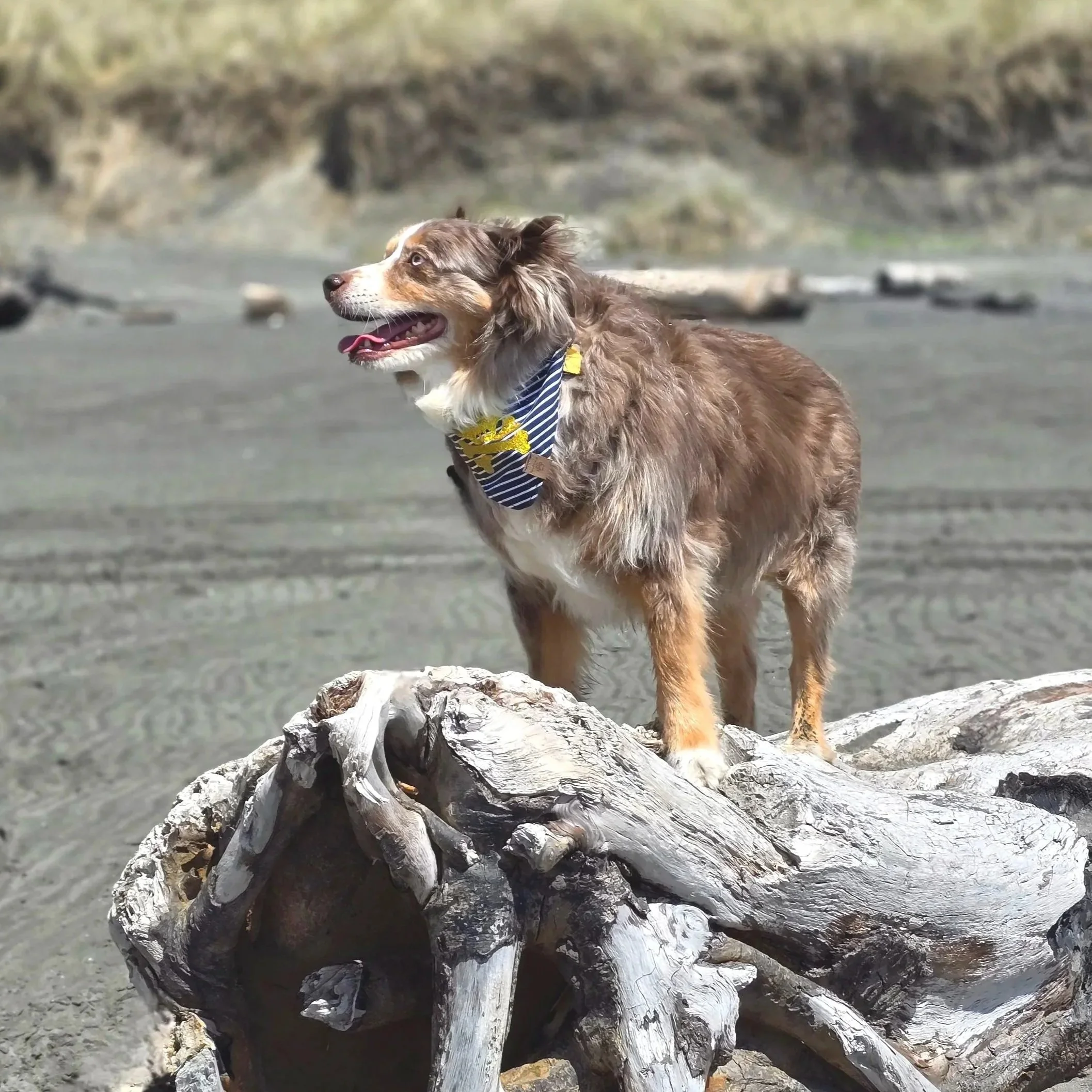
Bijoux on the beach
Dogs at Higher Risk
Some dogs struggle with heat much more than others, including:
Flat-faced breeds (Bulldogs, Pugs, French Bulldogs, Boston Terriers, Shih Tzus)
Puppies
Senior dogs
Overweight dogs
Dogs with heart or respiratory conditions
Dogs with thick double coats
These dogs may overheat even when temperatures seem moderate.
Tips for Safer Summer Walks
A few simple adjustments can make a big difference:
Walk early in the morning or after sunset.
Stay on grass or shaded trails whenever possible.
Bring fresh water and offer frequent breaks.
Let your dog set the pace.
Avoid strenuous hikes or games of fetch during peak heat.
Watch for excessive panting, drooling, slowing down, or seeking shade.
If your dog begins showing signs of overheating, stop immediately, move them to a cool area, offer cool water, and begin cooling them while contacting your veterinarian.
Protect sensitive paws: Whenever possible, choose grassy paths, dirt trails, or shaded sidewalks instead of hot asphalt or concrete. If you can't comfortably hold your hand on the pavement for seven seconds, it's too hot for your dog's paws.
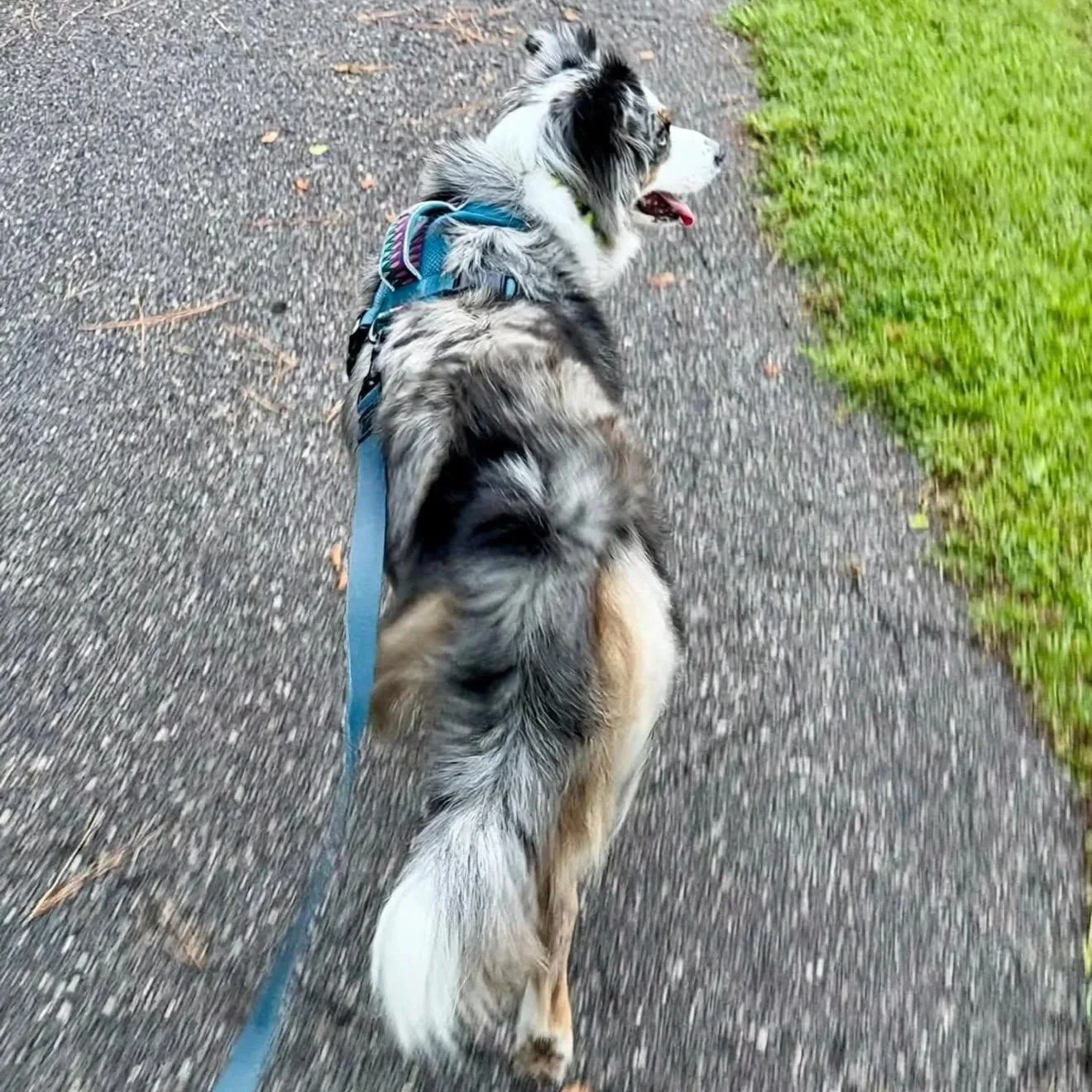

Ambassador Lilo taking a walk on pavement cool to the touch.
Ambassador Sancho hitting the trails to avoid hot pavement.
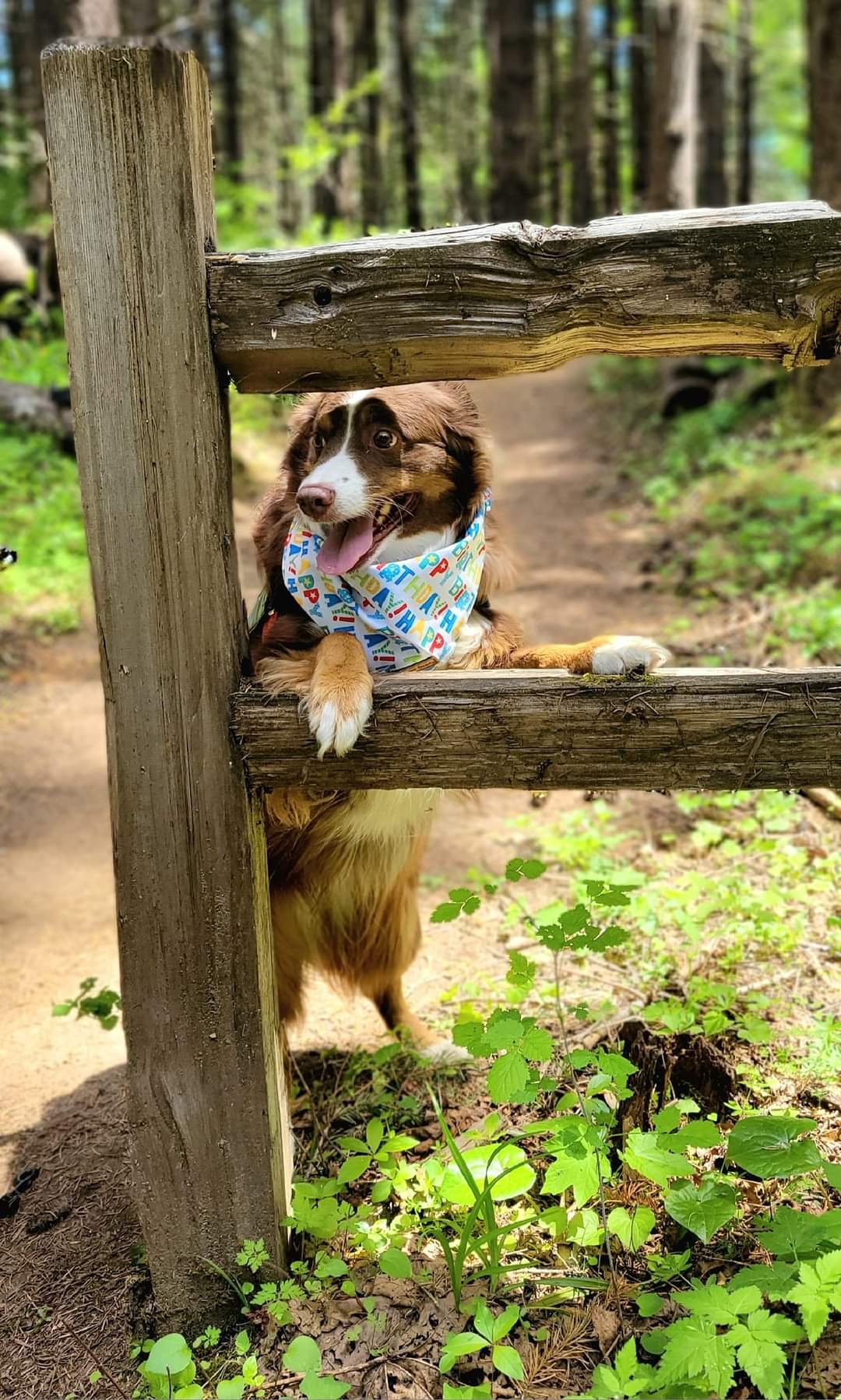
Sandwich enjoying a hike in at Stub Stewart State Park to avoid hot pavement.
There Are Plenty of Ways to Exercise Without the Heat
When it's simply too hot outside, try activities that keep your dog mentally and physically engaged indoors:
Puzzle toys
Nose work and scent games
Short indoor training sessions
Tug or gentle fetch indoors
Frozen enrichment treats
Snuffle mats
Mental exercise can be just as tiring as a long walk.
Final Thoughts
The best summer adventures are the ones that end safely. Paying attention to the weather, checking pavement temperatures, and adjusting your routine during hot days can help protect your dog's paws and prevent dangerous heat-related illnesses.
Sometimes the safest choice is waiting until the sun goes down. Your dog won't mind—and their body will thank you.
Coming Next in Our Summer Dog Safety Series:
🐶 Water Safety for Dogs: Pools, Lakes, Rivers & Beaches